How a Verde Valley tasting-room visit works, and what it costs
A tasting here is a paid flight of small pours, usually without a booking. The part that needs planning is the driving.
· 4 min read
Notes on Arizona wine
Verde Valley · Sonoita · Willcox
Dated notes on the state's three wine regions, the grapes that grow at altitude and how a tasting-room visit works.
Latest
Updated
A tasting here is a paid flight of small pours, usually without a booking. The part that needs planning is the driving.
· 4 min read
Wine country
A wine region in the United States is a line on a federal map, drawn after growers prove that the ground inside it differs from the ground outside. For the Verde Valley that took a petition, nearly two years of rulemaking and a boundary traced for much of its length along a single contour line.
Grapes and growing
Most wine regions hope for a dry harvest. Arizona's arrives in the middle of its rainy season, and growers plan the whole vineyard around that.
Wine country
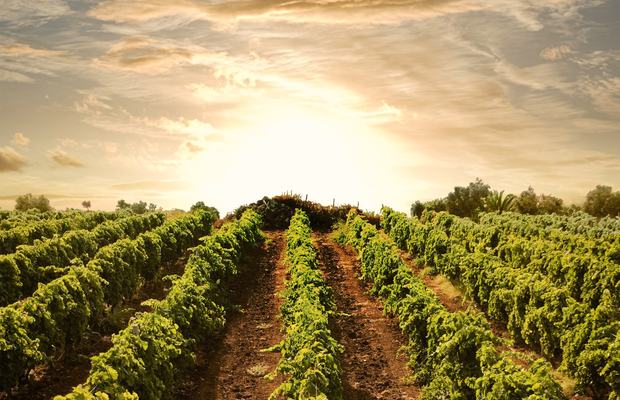
Arizona has three federally recognized wine regions, and they share almost nothing except altitude and a dry climate. One is a high grassland near the border, one a flat basin around a dry lake, one a river valley below the Mogollon Rim.
Wine country
No Arizona vineyard lives on rain. The water under the vines comes from wells, and since January 2025 the Willcox basin, where much of the state’s fruit grows, has been an Active Management Area. There irrigation of new acreage is prohibited, so a new vineyard has to go on ground that was already watered.
4 notes, 2024–2026
Where Arizona's vineyards are, and why there.
2 notes, 2026
The vines, and the weather they have to live through.
2 notes, 2026
Going to taste, and getting home again.
New to Arizona wine
New to Arizona wine? Start with Sonoita, Willcox and the Verde Valley compared, then read how a tasting-room visit works and which grapes suit the high desert.
Arizona makes its wine at altitude. The vineyards sit above 3,000 feet, where desert days run hot, nights cool off fast and the ground drains almost as soon as it gets wet. A grower here plans around late spring frost, a parched early summer and then the monsoon, the season of afternoon thunderstorms that usually rolls in during July while the earliest grapes are starting to ripen. That overlap gives this site its name: across much of the state, picking and the summer rains fall in the same few weeks.
Three American Viticultural Areas carry the state’s name on a label. Sonoita, in the grassland southeast of Tucson, was the first, recognized in 1984. Willcox came next in 2016, and its high basin in Cochise County now grows most of the wine grapes planted in Arizona. The Verde Valley, below the red rock country north of Phoenix, was added in 2021. Its tasting rooms gather along Oak Creek at Page Springs and Cornville, in old town Cottonwood, in Clarkdale and on the steep streets of Jerome.
Monsoon Vintage is a set of plain, dated notes for visitors and curious drinkers who want to know what is in the glass and where it grew. The notes sit in three sections.
Wine country deals with the regions: where each one lies, how it earned an appellation, and what water and elevation mean for a vineyard in dry country. It also keeps a guide to the Verde Valley’s wineries and tasting rooms as they stood in September 2024.
Grapes and growing is about the vines. Many of the varieties that cope with Arizona’s heat and cold come from Spain, the Rhône and southern Italy, and the section follows them from bud break to the picking bins.
Visiting covers the practical side of going: how tasting rooms tend to work, when to go, and how to get between them. A day of tasting is a day of drinking, so settle on a designated driver or book a ride before the first pour.
Tasting fees, opening hours and even the names over the doors change from year to year, which is why every piece shows the date it was finished. Every piece appears in the archive by date.
When things happen in an Arizona vineyard, month by month.